Leave Your Message

Blog

China Best Magnetic Bead Technology Suppliers?

China Best Magnetic Bead Technology Suppliers?

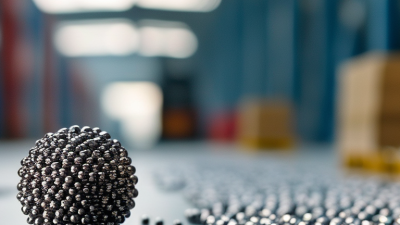
China has really become a key sourcing base for lab magnetic particles—especially for nucleic-acid extraction, immunoassays, cell separation, and bioprocessing. Magnetic Bead Technology now supports everything from small clinical cartridges to automated high-throughput systems. And the value is pretty practical: faster washing, less solvent use, and easier liquid handling in a 96-well plate. Industry data backs that up. MarketsandMarkets' Magnetic Beads Market report points to life-science research, diagnostics, and drug development as big demand areas. Grand View Research also expects continued growth in magnetic-bead applications, driven by molecular diagnostics and lab automation. These reports do suggest strong market expansion. But their categories may mix reagents, instruments, and related consumables. Honestly, that limitation is worth paying attention to. China-based suppliers like BeaverBeads, Magen Biotechnology, TianGen Biotech, and Nanoeast often come up during supplier screening. Their portfolios might include silica beads, carboxyl beads, protein-binding beads, and preloaded extraction reagents. Buyers should look at binding capacity, particle-size distribution, lot-to-lot consistency, recovery rate, and performance with real sample types. A polished spec sheet? Not enough. Test the beads. Independent validation still matters. Experienced labs should ask for certificates of analysis, stability data, transport conditions, and application protocols. ISO 13485 certification can help with quality-system assessment, but it doesn't automatically prove application performance. Supplier claims also need context, especially for clinical use. A reliable comparison should include extraction yield, purity ratios, hands-on time, and cost per processed sample. Some public supplier information is incomplete—and yeah, that's an uncomfortable but useful finding. So a careful shortlist should balance published evidence, technical communication, audit readiness, and verified trial results.
Read more »
Aria By:Aria - October 16, 2026
China Top Biotech Instruments Suppliers for Global Buyers

China Top Biotech Instruments Suppliers for Global Buyers

China’s Biotech Instruments sector is becoming a pretty big deal for labs, hospitals, and biopharma manufacturers around the world. Grand View Research expects the global biotechnology instruments market to keep growing steadily through 2030, helped along by genomics, cell analysis, and automated lab workflows. MarketsandMarkets also points to China as a major growth market, fueled by research investment, pharma development, and expanding diagnostic capacity. So yes, the opportunity is substantial. But here’s the thing: choosing a supplier isn’t just about comparing catalogue prices. Global buyers need to dig into calibration records, ISO certifications, software compatibility, installation support, and long-term access to spare parts. That precise pipetting platform may look great online — but weak validation support can hold up an entire assay programme. This is where real-world experience really matters. Dr. Jonathan Rothberg, who founded several life-science technology companies, has often stressed the importance of making advanced biology more accessible. His much-quoted line, “The future of medicine is in the cloud,” captures a broader shift toward connected instruments, automated data capture, and scalable analysis. But that vision also shows a weak spot: equipment alone doesn’t create reliable science. This guide looks at leading China-based suppliers of Biotech Instruments for international buyers. It weighs product depth, manufacturing capability, quality systems, export experience, and how responsive after-sales support is. Companies like BGI, MGI Tech, Shanghai Biochip, and Drawell may fit different lab needs — from sequencing and microarrays to general research equipment. No ranking is perfect. Supplier performance can shift by model, region, and service team. So before you commit, ask for sample data, factory documentation, user references, and a clear warranty. A careful comparison might take a little longer, but it can save you from some expensive surprises after installation.
Read more »
Aria By:Aria - October 11, 2026
Top Biotech Instruments Suppliers for Global Buyers

Top Biotech Instruments Suppliers for Global Buyers

Choosing the right Biotech Instruments supplier can shape an entire research program—no exaggeration. It touches everything from data quality and workflow speed to how confident your staff feels day to day, not to mention long-term operating costs. So global buyers need more than a familiar brand name. They need evidence. Dr. Leroy Hood, a pioneer in systems biology, once described the future of medicine as “predictive, preventive, personalized, and participatory.” That vision only works if instruments are reliable and data is dependable. Suppliers like Thermo Fisher Scientific, Agilent Technologies, Illumina, Bio-Rad Laboratories, Sartorius, and Shimadzu all serve different lab priorities. Some are stronger in sequencing, others in chromatography, cell analysis, imaging, automation, or bioprocessing. Accuracy matters. Service matters. And honestly? Local support can matter even more. This guide looks at the practical side of choosing a supplier. Things like analytical performance, throughput, software usability, validation support, consumable availability, training, and total ownership cost. It also covers regional distribution, warranty terms, maintenance response, and documentation quality. A lower purchase price can hide expensive consumables or repair headaches. A premium platform might still be a poor fit for a small lab with limited staff. No supplier wins in every category. That's kind of the uncomfortable part. Buyers have to compare instruments against real workflows, not glossy brochures. Ask for application data, check support capabilities, and talk to experienced users. Some decisions will still be imperfect—especially when budgets, timelines, and technical demands pull against each other. But a transparent comparison can cut down avoidable risks and help support more reproducible research. Think of this overview as a balanced starting point for global buyers evaluating Biotech Instruments with professional judgment and realistic expectations.
Read more »
Ethan By:Ethan - October 7, 2026
How to Choose the Best Cell Culture Reagents?

How to Choose the Best Cell Culture Reagents?

Picking the right cell culture reagents isn’t just about buying stuff off the shelf — it’s a pretty practical decision that can really impact your results. A clear, well-thought-out formulation can make all the difference when it comes to how cells attach, grow, and look under the microscope, not to mention how consistent your experiments turn out. In a real lab, it’s often the little details that matter most. For example, a cloudy medium, repeatedly freezing and thawing the same batch, or using unstable supplements can mess up your data even before you get to analyzing it. Start by considering your cell type, what you’re trying to do, and your culture conditions. Primary cells usually need some special growth factors, whereas established cell lines tend to be a bit more forgiving with their formulations. When it comes to cell therapy reagents, things like traceability, sterility, raw materials, and lot-to-lot consistency are super important. Always check the certificate of analysis, storage instructions, expiration date, and testing procedures. Reputable suppliers like Thermo Fisher, Merck, and Lonza usually provide detailed technical info — that can help you make a smarter choice. Honestly, performance matters way more than a fancy label or pretty packaging. Look into data on cell viability, doubling time, contamination control, and whether the reagent works well with your incubator settings. And don’t forget to ask: has it been tested with your specific cell type? That’s a question many folks overlook. A reagent might do great in one lab but underperform in another, due to handling differences, plasticware, or how the medium is prepared. And a word of caution — don’t just go for the cheapest option. A lower-cost product might require extra work to optimize, while the more expensive stuff isn’t guaranteed to have the validation data you need. Keep detailed records for each lot, and be honest about any deviations you encounter. No choice is perfect, and even seasoned teams sometimes need to reassess their suppliers if the cells start acting funny. The best overall approach is to combine published evidence, real-world lab experience, expert advice, and thorough testing before making your routine selections.
Read more »
Aria By:Aria - September 30, 2026
What Are the Best Molecular Biology Reagents in 2026?

What Are the Best Molecular Biology Reagents in 2026?

By 2026, picking Molecular Biology Reagents isn’t just about spotting a fancy label. Instead, it’s more about finding the right tool that actually fits your specific experimental needs. You might see a polymerase that looks amazing on paper, but then it behaves totally differently when you’re working with a tricky template. Or a buffer might save you some time—if it works well with your protocol and samples. Little details really do matter here—you know, things like lot-to-lot consistency, how you store your reagents, contamination control, and whether you can easily get help when you need it. Sydney Brenner, who won a Nobel Prize in molecular biology, once said, “Progress in science depends on new techniques, new discoveries and new ideas, probably in that order.” That still hits home today. The reagents you pick shape what you can measure, replicate, and interpret in your experiments. So, choose wisely. This guide is here to help you break down how to evaluate common reagent categories—from enzymes and nucleic acid purification kits to antibodies and cell culture supplements. We’re focusing on practical stuff like proven performance, clear specs, proper controls, and evidence that a product will do what it’s supposed to. Independent validation is great, but keep in mind—no one-size-fits-all benchmark exists. A kit that’s great for speed might not be ideal if you need high yield or super-sensitive detection. Sure, there are trade-offs. Price alone isn’t the whole story, and just because you’ve used a brand before doesn’t mean it’s the best choice. The "best" reagent really depends on your sample, your method, and the quality standards you’re aiming for—and sometimes, the evidence is still a little fuzzy. That’s worth taking another look at. The sections ahead are designed to give you a solid framework for comparing options in 2026—without just taking marketing claims at face value.
Read more »
Liam By:Liam - September 26, 2026
How to Source Gene Therapy Products Globally?

How to Source Gene Therapy Products Globally?

Sourcing gene therapy products from around the world isn’t just a straightforward purchase—it's a bit more complicated than that. You really need to lean on scientific judgment, verify your suppliers carefully, and coordinate across different borders without losing track. Just one shipment can include viral vectors, plasmids, special containers, and plenty of temperature logs. And every item has to come with clear documentation and be handled under strict conditions. Missing even small details can cause big delays, so attention to detail really matters. Carl June, one of the top CAR-T researchers out there, once said, “We are at the beginning of a new era in medicine.” That really captures the exciting yet complex world of cell and gene therapy development. For procurement teams, it’s crucial to match the huge promise of these therapies with solid manufacturing capabilities. They need to evaluate things like GMP compliance, batch history, analytical methods, cold-chain reliability, and how deviations are managed. Big players like Thermo Fisher Scientific, Catalent, and Lonza show just how important having the right technical infrastructure is. But, just because a supplier is well-known doesn’t automatically mean they’re the right fit. The best sourcing strategies actually connect the specific clinical needs with practical supply options. Teams should compare vector quality, production capacity, lead times, packaging options, and the long-term ability to support supply. It’s also important to review all relevant requirements from authorities like the FDA and EMA. Remember, no sourcing plan is foolproof—things can slip through the cracks. Even a simple spreadsheet can hide assumptions that aren’t solid. That’s why site audits, clear quality agreements, and open, transparent communication are so vital. Gene therapy products are extremely sensitive, and their success depends on more than just good lab work. It’s about dependable execution, thorough documentation, and responsible oversight from the manufacturing stage all the way to the patient receiving treatment.
Read more »
Liam By:Liam - September 22, 2026
How to Choose Life Sciences Tools in 2026?

How to Choose Life Sciences Tools in 2026?

Picking the right Life Sciences Tools in 2026 isn't just about comparing specs or falling for flashy marketing claims. Labs need to dig a little deeper—things like accuracy, reproducibility, how well it fits into their workflow, service quality, and what it actually costs to own over time. Sure, a sequencer might boast about higher throughput, but its true value can get lost if staff need weeks of training or if maintenance delays mess up critical experiments. Those small details really matter—think calibration records, software updates, sample handling, and how clear and responsive technical support is. Marc Casper, who used to be President and CEO of Thermo Fisher Scientific, once said, “The customer is at the center of everything we do.” And honestly, that’s a good mantra to keep in mind when you're choosing life sciences tools. Good, reliable decisions connect how a product performs with what’s actually happening in the lab. Instead of just relying on pretty demos, it's smarter to look at independent validation data, peer-reviewed studies, transparent documentation, and feedback from actual scientists working with these tools. Even if tools from companies like Illumina, Danaher, and Thermo Fisher Scientific look similar, they can differ a lot in their ecosystem, how well they integrate, and the kind of support you get. And let’s be real, there’s no such thing as a perfect purchase. A practical approach means considering more than just the tech specs—you should also think about data security, responsible use, sustainability, and meeting quality standards. By 2026, AI might help with analysis and automation, but it won’t replace human judgment. Some comparisons will still be tricky. For instance, you might be tempted to choose an instrument just because it’s cheaper upfront, but long-term reliability and support could make another option smarter. This guide takes a close look at those kinds of trade-offs, using real-world lab scenarios and clear criteria. The goal isn’t to automatically push the newest or most expensive tool, but to help researchers pick technology they can stand behind, maintain, and actually trust.
Read more »
Ethan By:Ethan - September 18, 2026
What Are the Best Biotechnology Solutions in China?

What Are the Best Biotechnology Solutions in China?

China’s biotech scene is really shifting gears now—moving from just rapid growth to actually delivering real clinical and industrial results. According to the National Bureau of Statistics, the country spent about RMB 3.63 trillion on research and development in 2024, which is roughly 2.68% of their GDP. Yeah, that figure covers all kinds of industries, but it does give us a good sense of how much money is flowing into biotech specifically. Plus, the IQVIA Institute’s Global Trends in R&D 2024 pointed out that China’s definitely a major player when it comes to pharmaceutical pipeline activity. You can see that momentum in companies like BeiGene, WuXi AppTec, BGI Genomics, and CanSino Biologics— they’re all making waves. But hey, just having huge scale isn’t everything. The real winners in biotech are those who combine solid evidence, secure manufacturing processes, compliance with regulations, and realistic expectations for clinical outcomes. Think of areas like precision diagnostics, antibody treatments, cell and gene therapies, agricultural biotech, and bio-based manufacturing—these are the kinds of solutions making a difference. J. Craig Venter, one of the top genomics scientists, once said, “Biology is the most powerful technology ever invented.” And honestly, he’s still right. But here’s the thing—tech alone isn’t enough. Without careful validation, proper reimbursement, or consistent production, even the coolest platform can fall flat. So, what does this all mean? Well, this overview tries to compare China’s leading biotech solutions through these practical filters: published data, development experience, manufacturing capacity, and how relevant they are to patients. Overall, the outlook’s pretty promising, but it’s not all sunshine and rainbows. Industry stats can vary depending on the report, and private companies don’t always spill all the details, which adds a bit of uncertainty. That’s worth keeping in mind. So, don’t just see rankings as the final say—they’re more like informed guides. The strongest contenders aren’t always the biggest names, but those who can turn laboratory success into safe, accessible, and reliable results that actually help people out.
Read more »
Aria By:Aria - September 14, 2026
10 Best Biotech Consulting Firms for Global Buyers?

10 Best Biotech Consulting Firms for Global Buyers?

When it comes to biotech, buyers around the world don’t usually pick a consulting firm just because of its reputation. They want to see real proof that the advice actually works—whether that’s in a lab, a boardroom, or navigating complex regulations. In this guide, I’m sharing insights into ten top Biotech Consulting firms. You’ll find names like McKinsey & Company, Boston Consulting Group, Bain & Company, Deloitte, IQVIA, L.E.K. Consulting, Putnam, ClearView Healthcare Partners, Trinity Life Sciences, and ZS. Now, these firms aren’t all the same. Some really shine when it comes to clinical development strategy. Others are more about market access, commercial planning, manufacturing, or helping out with transactions. Sometimes, a biotech company might need someone who understands a Phase II trial one day and then is sitting in a hospital procurement meeting the next. That kind of versatility isn’t common, and it’s totally worth doing your homework to find the right fit. John LaMattina, who used to be the President of Pfizer Global Research and Development and is now a biotech industry advisor, nailed it when he said, “Drug development is a high-risk, long-term business.” That’s a reality we all need to keep in mind. Good consultants don’t just gloss over uncertainties—they actually explain them. They’ve got solid project experience, qualified scientific teams, transparent methods, and clear results to back up their advice. This guide looks at firms through that kind of lens—considering their global reach, expertise in different therapeutic areas, regulatory savvy, data skills, and how well they fit with what you need. It also lays out an important, maybe uncomfortable truth: even the best advice cannot fix bad science, poor management, or impossible timelines. Some firms seem perfect on paper, but their true performance depends on team stability, local market know-how, and honest communication. For global biotech buyers, the biggest or most famous name isn’t always the best choice. Sometimes, it’s the partner that will challenge your assumptions, protect your data quality, and help turn complicated decisions into clear next steps. Finding that partner takes some digging, checking references, and honestly re-evaluating your first impressions. It’s all about choosing someone who really understands your unique needs and can stand by you through the ups and downs.
Read more »
Liam By:Liam - September 11, 2026
What Is the Best Type of Medical Device to Buy?

What Is the Best Type of Medical Device to Buy?

Picking out the best type of Medical Devices really starts with understanding what the user actually needs, rather than just going for what's popular. For example, a blood pressure monitor, a mobility aid, a glucose meter, or a home oxygen device all have their own specific purpose. The right choice depends on guidance from healthcare professionals, how easy it is to use, how much maintenance it needs, how accurate it is, and where it’s going to be used. The demand for these devices is pretty high. According to the World Health Organization and UNICEF’s 2022 Global Report on Assistive Technology, more than 2.5 billion people actually need at least one assistive product. That number might jump to over 3.5 billion by 2050. With such a huge increase, folks buying these devices need to do more homework—comparing evidence, not just prices. Look for devices with clear instructions, support options, traceable manufacturing, and proper regulatory approvals. In the U.S., you can usually find this info through the Food and Drug Administration. In Europe, a CE mark might show that the device meets certain standards—but it’s no guarantee that everyone will get the same results. Details totally matter here. Can an older person easily read the screen? Will the batteries last through a normal day? Are replacement sensors easy to find nearby? Can it be cleaned conveniently after daily use? Asking these kinds of questions often tells you more than any shiny advertisement. Looking at independent tests, recommendations from doctors, and published performance data gives you a much clearer picture than reviews alone. Still, no single checklist can cover everything. Personal circumstances, how well someone is trained, and ongoing follow-up all play a role. Usually, the best device isn’t necessarily the newest or most high-tech one, but the one that’s safest, most suitable, and easiest to support for that specific individual.
Read more »
Aria By:Aria - September 6, 2026
2026 Best Gmp-Grade Reagents for Global Buyers Needs?

2026 Best Gmp-Grade Reagents for Global Buyers Needs?

You know, in the constantly changing world of chemical manufacturing, Gmp-Grade Reagents are playing a really key role. As more and more buyers around the globe start looking for reliable sources, getting a good grasp on these reagents becomes pretty important. Big names like Sigma-Aldrich and Thermo Fisher Scientific are pretty much the go-to, and they consistently hit high standards. Their experience really helps ensure that Gmp-Grade Reagents are up to the task—whether it’s for research or industrial use. That said, shopping around can get a bit tricky. Loads of suppliers claim they have top-notch reagents, but not all of them actually stick to GMP standards. This mismatch can cause headaches down the road, especially in product development. Plus, some companies aren’t super transparent, so it’s hard to tell if their products really meet the quality and compliance needed. To avoid getting burned, buyers need to do their homework—checking certifications, verifying quality control processes, all that good stuff. In this overview, we’re going to look at some of the most well-known brands and their Gmp-Grade Reagents. Knowing who the market leaders are can really help you make smarter, more informed choices. As we go through different products, it’s clear that not all reagents are created equal. Paying close attention to specs and details is essential if you want things to work out in your applications. It’s a constant quest for quality, which is why having trustworthy partners in the chemical game really makes all the difference.
Read more »
Ethan By:Ethan - August 31, 2026
Best Cell Culture Media Options for Global Buyers?

Best Cell Culture Media Options for Global Buyers?

In the fast-moving world of regenerative medicine, you really can’t underestimate just how important high-quality Cell Culture Media is. I mean, Dr. Emily Chen from BioTech Innovations puts it perfectly — she says, “Having top-notch Cell Culture Media is absolutely essential if you wanna get any good results in cell research.” With folks all over the globe hunting for the best media out there, it’s no surprise that the huge variety of formulations can become quite overwhelming. Sometimes, it feels like there’s a new formula every other day! Choosing the right Cell Culture Media is a big deal because it directly affects how well cells grow and function. For example, Merck’s Cell Culture Media is pretty well-known for its dependability in European stem cell studies. But here’s the thing — not every media works for every type of cell line. Researchers often find themselves stuck trying to figure out which ingredients they need to customize their media to fit their specific needs. It’s all about ensuring the right components are in place and knowing that you’ve validated your choices. Of course, with so many companies offering their own products, concerns about reliability pop up a lot. Researchers want consistent, reliable results, but sometimes, they get discrepancies that throw a wrench in their work. That’s why it’s super important to really understand what’s in each media and to pick suppliers who support you with plenty of info and guidance. In the end, a trusted supplier isn’t just about good products—they’re about making sure your research doesn’t hit any unexpected snags.
Read more »
Liam By:Liam - August 28, 2026