Leave Your Message
0%

T&L Biotechnology really plays a huge part in today’s healthcare scene. They’re coming up with innovative solutions that are actually making a difference—improving how patients do and changing the way treatments work. In a world full of complex health issues, T&L Biotechnology kind of shines as a sign of progress, you know?

The tech-healthcare crossover is moving super fast right now. Take biotechnology, for example. It’s opening doors to personalized medicine, where treatments are tailored to fit each individual patient. And honestly, patients often see better results because of this approach. But, here’s the thing—while all this sounds promising, the full potential of T&L Biotechnology isn’t quite there yet. Some therapies still need loads of research before they’re ready for prime time.

And then there’s the issue of access. Biotechnology And Biotechnology Equipment isn’t equally available everywhere. Some parts of the world really benefit from it, while others are still catching up. That kind of disparity raises serious questions about fairness in healthcare. It’s definitely a challenge we need to face. The journey ahead is both exciting and a little overwhelming—T&L Biotechnology has to keep pushing forward with new innovations, but also make sure that everyone gets to share in these advancements.
Why is T&L Biotechnology Important for Modern Healthcare?

The Role of T&L Biotechnology in Drug Development

T&L biotechnology significantly enhances drug development processes. It accelerates the discovery of new therapies while ensuring their safety and efficacy. Over 70% of new drugs currently in development leverage biotechnological innovations. This shift has transformed the pharmaceutical landscape. Custom Biotechnology And Biotechnology Equipment play crucial roles in this evolution.

In drug development, researchers utilize advanced techniques to target diseases precisely. These techniques often rely on genetic and cellular engineering. For instance, monoclonal Antibodies have revolutionized treatment for many conditions, leading to improved patient outcomes. Despite these advancements, the regulatory environment presents challenges. There are concerns about the ethical implications and long-term effectsof biotechnologies. REports indicate that only12% of drug candidates successfully reach the market. This emphasizes the need for improved funding and research practices in the biotech field.

Continuous innovation remains essential. Yet, researchers often face setbacks due to high costs and complex regulations. Many biotech start-ups struggle to develop their products, highlighting the gaps in support and resources. Industry data shows that 60% of biotechnology firms experience funding shortages. The future of drug development relies heavily on overcoming these obstacles while maximizing the potential of custom biotechnology and biotechnology equipment.

Impact of T&L Biotechnology on Personalized Medicine

Personalized medicine is reshaping healthcare. T&L biotechnology plays a crucial role in this transformation. It enables treatments tailored to individual patients. Traditional methods often use a one-size-fits-all approach. This can lead to ineffective outcomes. By analyzing a patient's unique genetic makeup, targeted therapies can arise. The results can be life-changing, especially in oncology and rare diseases.

However, there are challenges. Not every patient responds to gene therapies as expected. The complexity of human biology complicates predictions. This approach requires High-Quality Biotechnology And Biotechnology Equipment. Investing in precise tools is essential for accurate results. Researchers must remain humble in their pursuit. Learning from failures can lead to breakthroughs in the future.

Tips for embracing T&L biotechnology include continuous learning. Healthcare professionals should stay updated on advancements. Collaborating with genetic specialists can enhance understanding. Encourage patient engagement in their treatment decisions. This can foster trust and improve adherence to therapies. Each step matters in the path toward effective personalized medicine.

Applications of T&L Biotechnology in Disease Treatment

Why is T&L Biotechnology Important for Modern Healthcare?

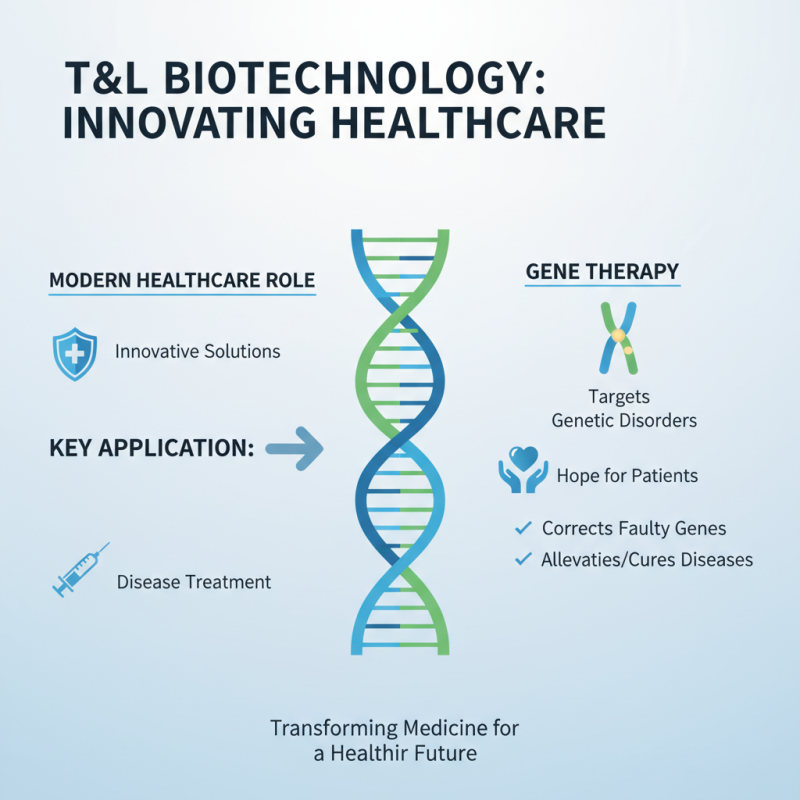
T&L Biotechnology plays a crucial role in modern healthcare. It brings innovative solutions to disease treatment. One of its key applications is in Gene Therapy. This method targets genetic disorders and offers hope for many patients. By correcting faulty genes, it can alleviate symptoms or even cure diseases.

Another vital application is regenerative medicine. T&L Biotechnology facilitates the repair or replacement of damaged tissues and organs. For instance, stem cell therapy shows promise in treating conditions like heart disease. However, this field still faces challenges. Not all patients respond the same way to treatments. Further research is necessary to streamline these therapies.

Moreover, the development of personalized medicine is revolutionizing treatment plans. Tailoring therapies to individual genetic profiles improves efficacy. This approach increases the likelihood of positive outcomes. Yet, ethical questions arise around genetic manipulation. Society needs to engage in these discussions as biotechnology evolves. It’s crucial to balance innovation with moral considerations.

T&L Biotechnology's Contribution to Gene Therapy

Gene therapy is a significant advancement in modern healthcare. It offers solutions for genetic disorders that were once deemed untreatable. According to recent industry reports, the global gene therapy market is projected to reach $21 billion by 2026. This growth reflects the increasing importance of gene therapy in disease management.

T&L Biotechnology plays a crucial role in this field, especially through CGT Biotechnology And Biotechnology Equipment. These innovations enhance the precision of gene editing techniques. For instance, CRISPR technology allows for targeted modifications in DNA. Clinical trials have shown promising results, with over 40% of patients benefiting from these therapies. However, access to such treatments is still uneven. There are concerns about ethical implications and regulatory hurdles that need to be addressed.

While the potential is vast, some challenges persist. Not all gene therapies provide lasting effects. Some are temporary and require repeated treatments. Effectiveness can also vary among different patient populations. Continuous research is necessary to overcome these limitations. We must remain cautious about the pace of development and its applications in real-world settings.

Importance of T&L Biotechnology in Gene Therapy

The chart above demonstrates the increasing number of gene therapy clinical trials from 2018 to 2022. This growth highlights the significant role of T&L Biotechnology in advancing modern healthcare through innovative gene therapy solutions.

Regulatory Challenges in T&L Biotechnology for Healthcare

Navigating the regulatory landscape of T&L biotechnology is complex. These regulations are critical for ensuring safety and efficacy in healthcare applications. However, they can also be daunting for startups and researchers. The approval process often requires extensive data collection and documentation. This adds time and costs to development, which can hinder innovation.

One major challenge is the variability in regulations across different regions. What is permissible in one country may be prohibited in another. This creates confusion for companies looking to introduce new technologies globally. Moreover, the rapid pace of scientific advancement often outstrips regulatory frameworks. Authorities struggle to adapt, leaving gaps in oversight. These gaps can lead to unanticipated risks in patient care, raising questions about the adequacy of current regulations.

Stakeholders need to balance innovation with safety. Collaborative efforts between regulators and industry can help align these interests. Open dialogues and transparency are crucial in shaping better policies. As biotechnology evolves, so too must the frameworks we rely on to govern it. The future of T&L biotechnology in healthcare hinges on addressing these regulatory challenges effectively.

Future Trends in T&L Biotechnology and Healthcare Innovation

T&L biotechnology holds a crucial role in shaping the future of healthcare. One exciting trend is the integration of artificial intelligence in biotechnology. AI can analyze vast datasets, leading to quicker diagnosis and personalized treatment plans. However, relying solely on algorithms may overlook the human touch patients often seek.

Another trend is the rise of gene editing techniques. These tools offer hope for treating genetic disorders. Yet, ethical concerns about modifying human DNA linger. Striking a balance between innovation and ethical responsibility is necessary. Every advance should be approached with careful consideration.

Furthermore, collaboration between disciplines is becoming essential. Biotechnologists, medical professionals, and data scientists must work together. This synergy can lead to breakthroughs that significantly improve patient outcomes. Yet, communication barriers may hinder progress. Bridging these gaps is vital for effective innovation in healthcare.

Why is T&L Biotechnology Important for Modern Healthcare? - Future Trends in T&L Biotechnology and Healthcare Innovation
Aspect Current Status Future Trends Impact on Healthcare
Gene Therapy Emerging treatments for genetic disorders Increased accessibility and tailored therapies Potential cure for hereditary diseases
Stem Cell Research Advancing regenerative medicine Application in tissue engineering Revolutionizing treatment of chronic diseases
Biomanufacturing Production of biological products Sustainable production methods Lower costs and improved accessibility to medicines
CRISPR Technology Gene editing applications Precision medicine and agricultural biotechnology Enhanced disease resistance and crop yield
Personalized Medicine Tailored treatments based on genetics Integration of AI for data analysis Improved efficacy and reduced side effects

Ethical Considerations in T&L Biotechnology Applications

Why is T&L Biotechnology Important for Modern Healthcare?

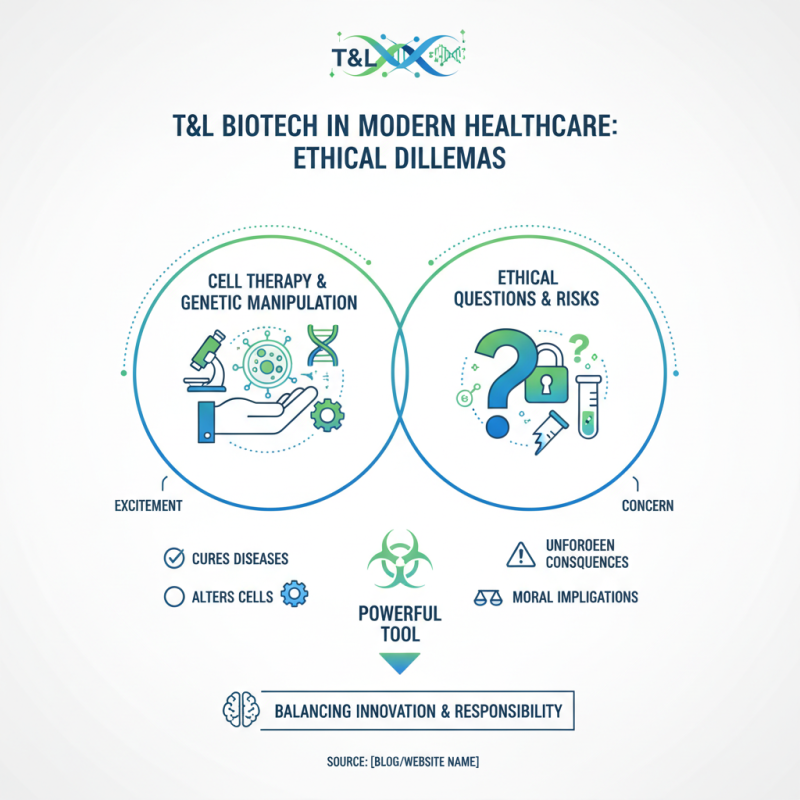
The integration of T&L biotechnology in modern healthcare raises several ethical questions. Particularly in areas like cell therapy, the implications of genetic manipulation provoke a mix of excitement and concern. Imagine using biotechnology equipment to alter cells, potentially curing diseases. This powerful tool can also lead to unforeseen consequences.

Informed consent becomes crucial. Patients must understand what they are agreeing to when undergoing treatments. There is a thin line between hope and exploitation in these therapies. If not transparent, patients might face risks they do not fully comprehend. Oversight is necessary to ensure that innovations in cell therapy do not outpace ethical deliberations.

Moreover, the equitable distribution of these advances is vital. Access to cutting-edge biotechnology should not be a privilege of the wealthy. Socioeconomic disparities could widen if only a few can benefit from these promising treatments. Striking the right balance between scientific advancement and ethical responsibility is essential in ensuring that T&L biotechnology serves all of humanity. Reflecting on these dilemmas invites dialogue about our values in healthcare.

FAQS

: What is the main purpose of this guide?

: The guide helps users understand key topics clearly. It provides practical tips and information.

Who can benefit from this information?

Anyone interested in learning more. It’s especially useful for beginners wanting foundational knowledge.

How should I approach learning these topics?

Start with basic concepts. Gradually build your understanding through practice and application.

Are there any common mistakes to avoid?

Yes, rushing the learning process is common. Take your time to understand each point thoroughly.

How often should I practice?

Regular practice is important. Aim for a few times a week to reinforce what you learn.

Can I explore these topics independently?

Absolutely, self-study is encouraged. Just ensure to check reliable sources for accurate information.

What if I feel confused or stuck?

It’s normal to feel this way. Take a break, then revisit the material for better clarity.

Is there a recommended learning format?

Varied formats work best. Mix reading, watching videos, and hands-on activities to enhance learning.

How do I track my progress?

Keep a journal or notes of what you learn. Regularly reviewing helps identify areas of improvement.

Can I collaborate with others while learning?

Collaborating is great! Discussing with others can offer new perspectives and deepen understanding.

Conclusion

T&L Biotechnology plays a crucial role in modern healthcare by significantly enhancing drug development processes. It facilitates the creation of targeted therapies, paving the way for personalized medicine that tailors treatments to individual patients' genetic profiles. Furthermore, T&L Biotechnology is applied in various disease treatments, demonstrating its efficacy in managing conditions that were previously challenging to address.

In addition to its therapeutic applications, T&L Biotechnology contributes to the advancement of gene therapy, offering promise for genetic disorders. However, the field faces regulatory challenges that must be navigated to ensure patient safety and effective integration into healthcare systems. As we look to the future, trends in T&L Biotechnology indicate a surge in healthcare innovation, paired with ethical considerations that must be addressed to maintain the integrity of biotechnological advancements.
Ethan

Ethan

Ethan is a dedicated professional at T&L Biotechnology Co., Ltd., where he specializes in marketing high-quality GMP-grade raw materials and reagents for cell and gene therapy (CGT). With a deep understanding of the intricacies involved in CGT, he plays a crucial role in bridging the gap between......
Previous Understanding the Essential Elements of Cell Culture Media